
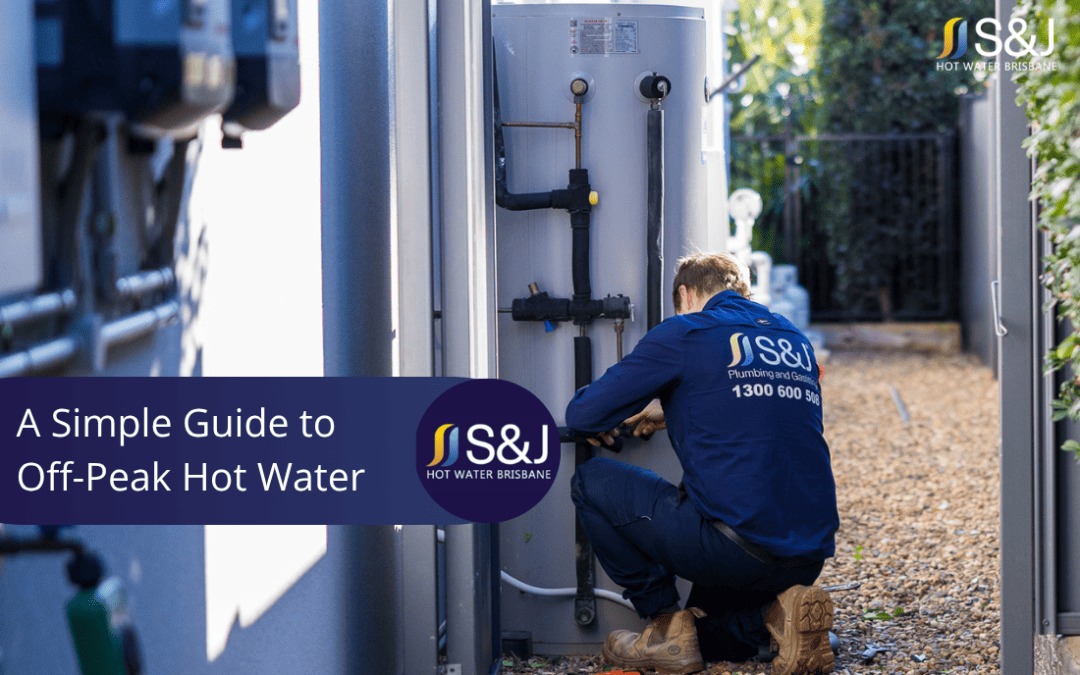
Are you a bit confused about all the ins and outs of off-peak hot water? You’re definitely not the only one! Many households across Queensland – and the rest of Australia – wonder:
- When their water actually heats up
- Whether they agreed to the arrangement in the first place
- And if they can change or override it.
The system is designed to save money and ease pressure on the electricity grid – but the details often leave homeowners scratching their heads.
In our exclusive guide here at S&J Hot Water Brisbane, we break it all down for you – explaining what off-peak means, how it works, and what choices you may have.
Let’s get into it:
1. What is off-peak hot water?
At its simplest, what is off-peak hot water, anyway?
It’s a setup where your electric hot water system is connected to a controlled load tariff. What that means is that instead of heating water at any time, the heater draws power only during cheaper, off-peak periods set by your energy provider.
The goal is to shift demand away from peak hours when households and businesses are all using electricity at once. For most people, it means cheaper energy bills – but also less flexibility, since heating times are controlled by the provider.
2. How does it work?
So, how does off-peak hot water work in practice?
The electricity retailer or distributor supplies power to your water heater during specific off-peak windows. These are usually overnight, sometimes extending into mid-day periods when demand is low. Your water tank is insulated, so it stores hot water ready for use during the day, even though heating itself is limited to certain times.
3. When does the heating happen?
One of the most common questions we hear is ‘When does off-peak water heat up?’ The answer depends on your provider and location.
In Queensland, off-peak usually runs overnight – for example, from 10 pm to 6 am – but controlled load tariffs in other states can vary. Some networks offer two heating periods per day, such as overnight PLUS a short mid-day boost.
In other words, the timing is not random – it’s dictated by the network to smooth demand across the grid.
4. Off-peak times explained
What time does off-peak hot water start? That’s another common question – because understanding the precise off-peak hot water times can be so difficult given that there’s no single nationwide schedule.
Each electricity distributor sets its own switching windows. In some areas, water heating may start around 11 pm, while in others it’s closer to midnight. Some controlled load tariffs even shift seasonally.
It’s worth checking with your retailer to confirm off-peak water times for your home.
5. Can you override it?
The big frustration, as we’ve laid out, is flexibility. Families sometimes run out of hot water before the next heating cycle. This raises the question:
How to override off-peak hot water?
Well, some modern systems have a hot water off-peak switch or “boost” button. When pressed, the heater draws electricity from your regular tariff, heating water immediately. This provides convenience but does cost more, since it’s billed at the higher peak rate.
Not every home has this option, but it’s worth asking your electrician if your system can be set up with a boost switch.
6. Changing heating times
Another frequent query is how to change hot water heating times.
Unfortunately, you can’t simply adjust the timer yourself, because the schedule is controlled by the electricity provider. If you’re unhappy with your heating times, the only solution is to speak to your retailer about changing to a different tariff – for example, from controlled load to general usage.
This often means higher bills but gives you complete control over heating.
7. Off-peak systems & heaters
An off-peak hot water system is usually a standard electric storage tank connected to a controlled load meter.
Some households use a dedicated off-peak water heater installed specifically for the tariff, often as part of a new hot water installation in Brisbane. These systems are common in Queensland but are also found in New South Wales, Victoria and beyond.
The main requirement is that the system is wired into a controlled circuit, separate from the general power supply.
8. Problems & faults
Sometimes, people worry about their off-peak hot water not working.
- This might be because the tank hasn’t heated fully due to unusually high usage
- Or it could be because the controlled load supply hasn’t kicked in
- Faulty meters, tripped circuit breakers, or broken thermostats can also be culprits.
Are you consistently running out of hot water? An electrician can check the wiring and system health – or advise on whether a tariff change makes sense.
9. Pros & cons
Like most things, off-peak heating has upsides and downsides.
Benefits:
- Lower running costs
- Less strain on the grid
- Reliable overnight heating
Drawbacks:
- Less flexibility on timing
- Possible cold showers if usage exceeds tank capacity
- Dependence on distributor schedules.
10. Nationwide relevance
While Queensland has one of the highest uptakes, the principles of off-peak apply right across Australia. That means that whether you’re in Sydney, Melbourne, Brisbane, Adelaide or beyond, controlled load tariffs work in much the same way: Water is heated when power is cheapest.
What differs is the schedule and the options available for boosting or opting out.
Need extra help with off-peak hot water?
“Why does my off-peak hot water system work the way it does?” As you’ve seen, we get asked a lot of questions about this often-confusing system, but most of the answers are tied to cost savings and grid efficiency. It means that while you may not have full control over timing, you can usually install a boost switch or change tariffs if flexibility is more important than savings to you.
If your system isn’t heating properly, or you’d like advice on boosting or changing your tariff, get in touch with S&J Hot Water Brisbane – our friendly team would love to help. We regularly assist households across the Brisbane Northside, Brisbane Southside, Logan, Moreton Bay, Redland Bay, and Ipswich regions.
Related posts:
 What Is A Solar Hot Water Booster Switch: 10 Common Questions
 Gas VS Electric Hot Water: What’s Right For You?
 Australia’s Types Of Hot Water Systems Ranked
 Understanding Hot Water Temperature QLD: All You Need To Know
 Counting Down Australia’s Top 6 Hot Water System Brands
 How Long Does Your Hot Water System Take To Heat Up?
