
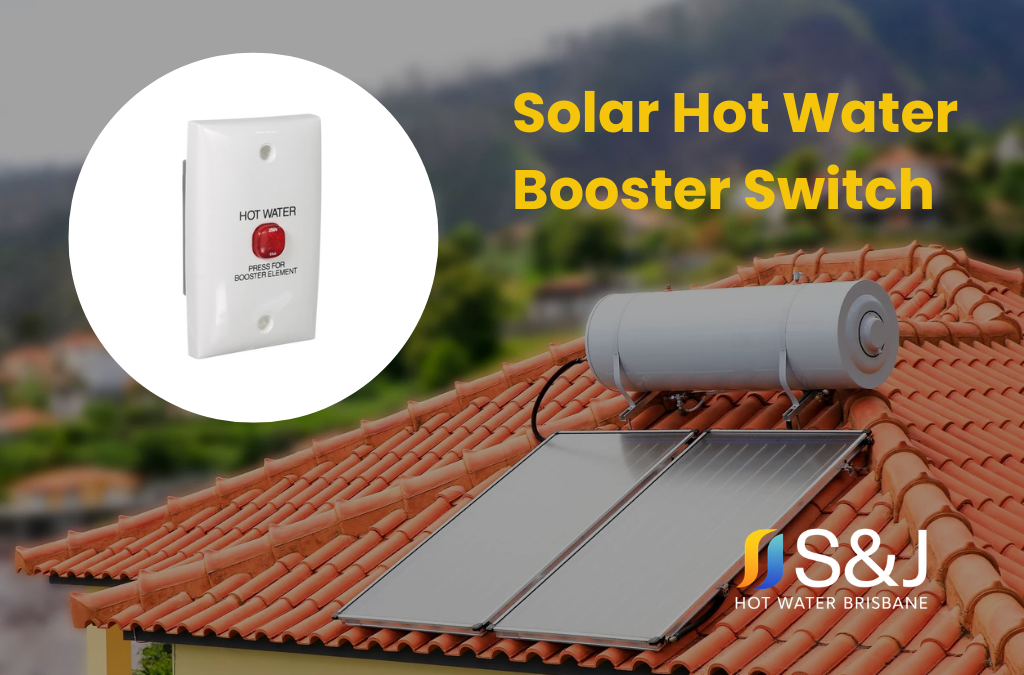
Solar hot water is one of those upgrades that just makes sense in Brisbane. You’re using the free and magnificent sun, you’re cutting down on soaring electricity or gas bills, and most days you don’t even have to know anything about the solar hot water booster switch. Instead, this amazing technology just quietly does its job in the background.
But then winter hits. Or you’ve had a few cloudy days in a row. Or the teenagers have all had back-to-back showers. Suddenly someone says, “Why is the water cold?”
That’s when the solar hot water booster switch enters the conversation.
A lot of homeowners know they have a booster. Fewer know:
- Where it is
- How it works
- Whether they should be touching it at all.
So let’s clear that up properly.
What is a solar hot water booster?
A solar hot water system works by using roof-mounted panels to heat water with sunlight. When there isn’t enough solar energy – at night, during heavy cloud cover, or in high-demand periods – the system uses a hot water booster to top up the temperature.
Depending on your solar system type, that booster might be:
- Electric (common in Brisbane homes)
- Gas (often instantaneous)
- Controlled by a timer
- Automatically thermostatically controlled.
In many electric systems, there’s a physical solar hot water booster switch that controls when the booster element operates. That’s the switch people go hunting for when the showers go cold.
Now, let’s answer the most common questions we’re always getting.
10 Questions about the solar hot water booster switch
Before you start flicking switches or opening the meter box, it helps to understand how your system is actually set up – because not every solar hot water booster switch looks the same, and not every home even has a visible one.
1. Is it actually a switch or a button?
In almost every Brisbane home, it’s a switch – not a button.
Most commonly, the solar hot water booster switch is either:
- A wall-mounted hot water switch that looks like a standard light switch
- A circuit breaker inside the main electrical meter box
- A timer installed inside the switchboard.
When people refer to a “button,” they usually mean the wall-mounted solar hot water system booster switch. But in many modern setups – especially controlled-load tariffs – there is no internal wall switch at all.
Instead, the booster switch solar hot water system is controlled directly from the switchboard.
2. Where is my solar hot water booster switch?
This is easily the most common question we hear.
In Brisbane homes, the solar hot water booster switch location typically falls into one of two categories:
Inside the main electrical meter box (very common):
You may find:
- A circuit breaker labelled “HWS”
- A breaker marked “Hot Water”
- A dedicated booster circuit
- A timer module installed inside the board.
In these systems, there may be no visible wall-mounted hot water booster switch at all.
Inside the home (less common but still seen):
In some installations, the solar hot water booster switch location may be:
- In the laundry
- In the garage
- Near the kitchen
- In a hallway near the switchboard.
So, if you’re asking “where is the booster switch for solar hot water?”, start at the meter box. That’s the most likely answer in Brisbane.
If you still can’t locate it, your system may be:
- On a controlled-load tariff
- Fully automatic
- Gas boosted (with no electric switch).
3. Should I leave the booster switch on all the time?
This depends entirely on how your solar hot water booster is configured.
Some systems:
- Automatically activate the hot water booster when temperatures drops
- Only operate during off-peak electricity periods
- Use built-in timers
- Are thermostatically controlled.
If you have a manual hot water booster switch and leave it on permanently without timer control, you may be paying for electricity that solar could have provided for free.
If you’re unsure whether your solar hot water system booster switch should remain on, it’s worth having the setup checked properly.
4. When should I turn the hot water booster on?
If your system requires manual activation, you may need to use the hot water booster switch when:
- You’ve had multiple cloudy days
- Winter demand increases
- You’re hosting guests
- The tank hasn’t reached safe storage temperature.
However, many Brisbane systems are fully automatic. In those cases, you don’t need to touch the solar hot water booster switch at all.
5. What does a solar hot water booster switch wiring diagram look like?
A typical solar hot water booster switch wiring diagram will show:
- Power supply from the switchboard
- A dedicated circuit breaker
- An isolation hot water switch
- Wiring to the booster heating element
- Earthing connection
Important: This is not DIY work!
Any wiring related to a hot water booster must be completed by a licensed electrician. Incorrect wiring can damage your solar hot water booster, void the manufacturer’s warranties, or create serious electrical hazards.
If you’re searching for a solar hot water booster switch wiring diagram because something isn’t working, the safest move is professional diagnosis.
6. Why is my booster not heating the water?
If the solar hot water system booster switch is on but you’re still getting cold water, the issue may not be the switch itself.
Common faults include:
- Failed thermostat
- Burnt-out heating element
- Tripped breaker in the meter box
- Timer malfunction
- Faulty tempering valve
- Gas ignition failure (for gas-boosted systems).
A solar hot water booster problem can sometimes be mistaken for a solar panel issue – but the repairs are completely different.
7. Can the booster increase my power bill?
Yes!
A hot water booster is essentially an electric heating element. If the booster switch solar hot water system runs continuously without smart control, it can significantly increase electricity costs.
Older systems especially can benefit from timer upgrades or configuration adjustments.
8. Is the booster switch the same as the main hot water switch?
Not always.
Some homes have:
- A main isolation hot water switch
- A separate hot water booster switch
- A switchboard-only controlled system
- No visible wall switch at all.
Understanding which switch controls what is important – particularly after renovations or moving into a new property.
9. Should I turn it off completely?
You may certainly turn the solar hot water booster switch off during extended holidays. It’s also something you should do:
- When the tank is being serviced
- If instructed by a plumber or electrician during diagnostics.
However, it shouldn’t remain permanently off if solar alone cannot maintain safe water storage temperatures.
10. What if I don’t have a visible switch?
If you’re still wondering, “where is my solar hot water booster switch?” and you genuinely cannot find one, your system may have:
- An automatic gas solar hot water booster
- A controlled-load electrical setup
- Direct switchboard integration
- No manual hot water switch accessible inside the home.
In many Brisbane properties, there is simply no wall-mounted hot water booster switch – and that’s completely normal.
Still unsure about your solar hot water booster switch?
If you’re still wondering where is my solar hot water booster switch, you can’t locate the correct hot water switch in your meter box, or your solar hot water booster isn’t heating properly, don’t leave it to guesswork.
The licensed team at S&J Hot Water Brisbane can quickly identify your solar hot water booster switch location, as well as testing it safely – so you can be sure it’s fully in line with Brisbane’s electrical standards.
Whether it’s a wiring issue, a faulty hot water booster switch, or a configuration problem, we’ll diagnose it properly and get your hot water running the way it should.
Call now or book online for same-day hot water service Brisbane wide.
Related posts:
 Understanding Off-Peak Hot Water In Australia
 8 Common Problems Your Solar Hot Water & What To Do
 Gas VS Electric Hot Water: What’s Right For You?
 How Does Solar Hot Water Work? A Simple Guide
 Electric Hot Water System Not Working? Try Our 9-Step Guide
 Solar Hot Water System Leaking On Roof? What To Check
