
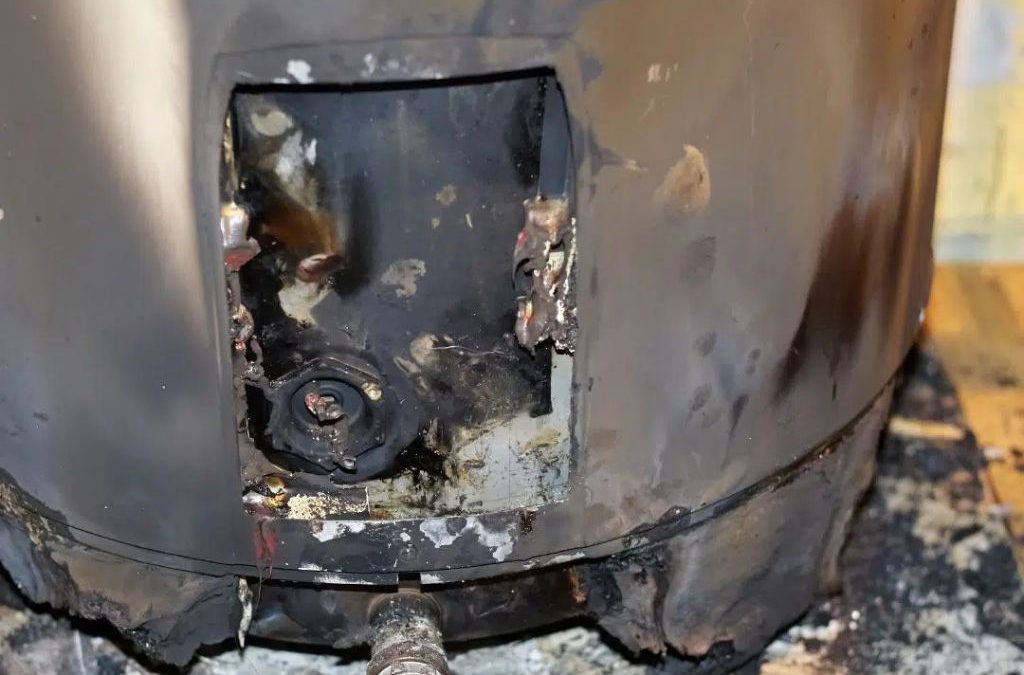
It’s one of those worrying questions people ask when they hear strange noises from their hot water system – can hot water systems explode?
The short answer is yes – technically they can. But here in Australia, where we’re actually lucky to be surrounded by all sorts of world-leading modern safety standards, it’s an extremely rare event. Still, it’s worth knowing:
- How and why it can happen
- Plus the other dangers that make hot water systems something you should never ignore.
When hot water systems really can explode
A hot water system explosion isn’t something that happens out of nowhere. It needs a specific set of failures that let heat and pressure build to dangerous levels.
The main culprits are:
A Faulty Pressure Relief Valve (TPR Valve)
Every tank has a safety valve that releases water if pressure gets too high. When it’s blocked or jammed shut, the pressure inside the tank has nowhere to go – and in rare cases, that can lead to a rupture or explosion.
Thermostat Malfunction
The thermostat controls how hot the water gets. If it breaks, the heating element can keep running until the water inside boils. Steam expands rapidly, which increases pressure beyond what the tank is designed to handle.
Excessive Water Pressure
Some Brisbane homes have high mains pressure. If the system’s pressure-limiting valve is faulty or missing, the tank can weaken and eventually burst.
Gas System Faults
Gas leaks or ignition failures in gas systems can cause small internal explosions or fires, although these are more often localised combustion events than full tank ruptures.
Severe Corrosion
In older units, corrosion can thin the tank wall. If pressure builds up at the same time, the weakened steel can give way – causing a hot water system burst rather than a true explosion.
So yes, it’s possible – but for a well-installed and regularly serviced system, it’s extremely unlikely.
What about when it’s turned off?
People sometimes ask us – Can a water heater explode if turned off? The simple answer is no. If the power or gas supply is off, there’s no heat being generated and therefore no pressure build-up.
However, problems can still develop over time. An unused system that’s left full of water can rust internally or develop hot water leaks, especially in Brisbane’s humid climate. It won’t explode, but it may fail or flood when you switch it back on.
The real dangers of hot water systems
While explosions grab attention and headlines, the more realistic risks of hot water systems are much more common – and in many cases just as costly or dangerous, actually.
Here are the main dangers homeowners should be aware of:
1. Scalding water
A failed thermostat can heat water beyond 60 °C, which can cause serious burns in seconds. Families with young children or elderly members should have their system temperature-checked regularly.
2. Leaks & flooding
A burst hot water system is the most common emergency we see across Brisbane. When tanks fail, they can release hundreds of litres of water in minutes, damaging floors, walls and electrical systems.
3. Carbon monoxide leaks (Gas systems)
Faulty burners or poor ventilation can cause carbon monoxide to leak into your home – a colourless, odourless gas that’s potentially deadly.
4. Electrical hazards
In electric hot water systems, water leaks can cause electrical shorts or safety switch trips. In the worst cases, they can lead to electric shock or fire hazards.
5. Blocked or failing valves
Sediment and limescale can block pressure or drain valves. Without proper relief, even minor heat fluctuations can put unnecessary stress on the tank.
6. Poor installation
We often find systems that were installed by unlicensed contractors that aren’t secured properly or don’t have compliant drainage. That’s not just a warranty issue – it’s a real safety risk.
7. Age & wear
Most hot water systems last 8-12 years. After that, corrosion and internal wear make leaks or bursts far more likely. Are you spotting:
- Rust marks?
- Discoloured water?
- Low hot water pressure?
If so, it’s time to consider replacement.
How to prevent problems
Luckily, preventing hot water dangers is pretty straightforward if you follow a few simple maintenance steps:
Test your pressure relief valve once a year: Lift the lever gently to ensure it releases water freely.
Book an annual service: A licensed plumber can inspect the thermostat, valves, and anode rod.
Check for signs of rust or water pooling: These are early warnings that your tank may soon fail.
Keep air vents clear: For gas hot water units, ensure adequate airflow to prevent gas build-up or carbon monoxide risk.
Know your system’s age: If it’s over a decade old, it’s likely more efficient – and safer – to replace it.
What to do if your hot water system bursts
If you ever experience a hot water system burst, here’s what to do immediately:
- Turn off the water supply at the isolation valve.
- Switch off the power or gas.
- Keep clear of any standing water near power outlets.
- Call a licensed plumber straight away.
Never try to drain or repair a damaged system yourself – the tank may still be under pressure or extremely hot.
Worried about hot water system safety?
So, can hot water systems explode? Yes – but in modern Australian homes, it’s an almost non-existent risk when the system is installed and maintained properly. The more realistic problems – leaks, corrosion, scalding – can all be prevented with regular servicing and a quick response to the warning signs.
Is your system:
- Leaking?
- Hissing?
- Showing signs of age or poor performance?
It’s best to act before it fails completely. If you need help or advice with your hot water system, reach out to S&J Hot Water Brisbane for same-day service, expert repairs and replacements – and guaranteed workmanship Brisbane-wide.
Related posts:
 How To Tell If Your Hot Water Tempering Valve Needs Attention
 How Long Does Your Hot Water System Take To Heat Up?
 Gas VS Electric Hot Water: What’s Right For You?
 Why Is Your Hot Water System Making Noise?
 Australia’s Types Of Hot Water Systems Ranked
 Our Exclusive 4-Part Rinnai Hot Water System Review
