
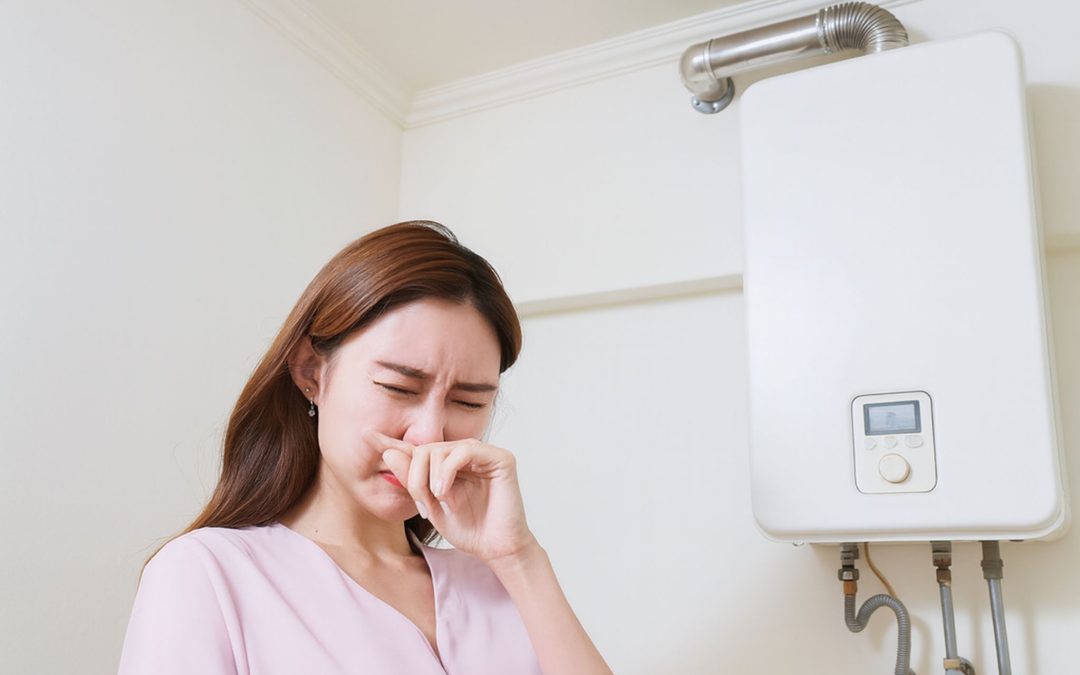
A gas hot water system should run quietly, cleanly and without any noticeable odour at all. So when a homeowner tells us their hot water system smells like gas, it’s definitely a sign that something isn’t right.
Even if the gas hot water smell is faint or comes and goes, gas issues should never be ignored. A leak, however, can develop slowly – and the warning signs are so undramatic you probably won’t even notice (for now!)
Here in Brisbane, most gas hot water heaters are located outside, but a leak can still drift into living areas or collect around the system. Many people describe it as a rotten egg smell, which is the odour deliberately added to gas so it’s easier to detect. Whether the smell is strong or subtle, safety must ALWAYS come first.
Before looking at causes, repairs or replacements, the very first priority is knowing what to do in the moment.
A quick look at the early warning signs
Some households notice the smell straight away. Others don’t realise something is wrong until the system stops working or becomes unreliable.
Common early signs include:
- A faint gas odour near the tank
- A pilot light that keeps going out
- Dark marks around the burner area
- A sudden increase in gas usage.
There are also cases where a water heater smells like gas but no leak is immediately visible. But that doesn’t make the situation safe! It simply means the fault is internal or intermittent, and it still needs urgent attention from a licensed gasfitter.
If you notice any of these warning signs, it’s time to follow a clear, simple action plan.
The 5-step safety plan every homeowner should follow
This is the most important part of the entire blog today. These steps help protect your household until a qualified technician arrives – and could save your property and even a life!
1. Turn off the gas at the appliance or at the meter
If it’s safe to do so, turn off the gas supply. Many hot water systems have an isolation valve beside the unit. If you’re unsure, or if the smell is strong, go straight to the gas meter and turn the main valve to the off position. Stopping the gas flow reduces the risk immediately and prevents the leak from worsening.
2. Ventilate the area
Gas can collect in still air. Allowing fresh air to move through the space removes pockets of gas and lowers the chance of ignition:
- Open doors and windows nearby
- Keep them open until the smell starts to fade
- Avoid standing too close to the system while you do this.
A bit of distance is always safer, especially if you suspect a serious leak.
3. Check the pilot light without attempting to relight it
A pilot flame that keeps going out can create the false impression of a larger leak. However, a failing pilot assembly can also be the cause of the leak itself.
- Take a quick look to see whether the flame is on or off
- Then leave it alone – and definitely don’t re-light it.
- Relighting a pilot in the presence of gas is extremely dangerous and should only be handled by a licensed gas plumber.
4. Avoid all electrical switches and flames
Even a small spark is enough to ignite gas in the right conditions.
- Don’t turn lights on or off.
- Don’t use appliances.
- Don’t smoke or use anything with an open flame near the system.
It might feel like an overreaction, but caution is always the safer choice – especially when you consider what could go wrong if gas is invisibly all around you.
5. Move people away from the area and call a specialist
Once the system is off, the area is ventilated and everyone is at a safe distance, call a licensed gasfitter. Gas work should never be handled by anyone other than a qualified professional.
Here at S&J Hot Water Brisbane, our team can:
- Inspect the system
- Identify the exact source of the leak
- Make the unit safe again.
Why hot water systems start smelling like gas
Once immediate safety is handled, most people naturally want to know what actually caused the smell. While every home is different, there are several common reasons why a gas hot water heater smells like gas.
Faulty Gas Valve: These valves regulate the flow of gas into the burner, and when they fail, small leaks can escape around the fittings. Another common issue is a worn or damaged pilot assembly. Over time, the thermocouple or other components can wear out, allowing gas to flow when it shouldn’t.
Cracked Burner: Some systems develop cracks in the burner assembly or in the flue area. A damaged burner won’t burn gas cleanly, which produces odours and poor combustion. Incorrect hot water installation can also lead to ongoing leaks, especially if joints were not tightened correctly or if the wrong type of pipe or sealant was used.
Age: An older system can develop corrosion around fittings and seals. Even a small amount of deterioration can create a small but persistent gas leak.
These are the sorts of situations where a homeowner notices that familiar rotten egg smell, even if the unit still seems to be working.
Regardless of the cause, the smell is a sign that the system is no longer safe. Gas issues don’t fix themselves, and they tend to worsen quietly over time.
Repair or replace? What the plumber looks for
Not every gas smell results in a major repair. Sometimes the cause is a worn seal or a single defective part. In those situations, the fix is straightforward. If the issue is more complex, our hot water repairs Brisbane service can assess the safest and most cost-effective option.
However, some systems reach a point where replacement is safer and more cost-effective. A plumber will look at things like:
- The age of the unit
- The condition of the burner assembly
- The reliability of the valve
- Whether repeated faults have been occurring.
If a system has multiple deteriorated components or if the leak is coming from an internal part that’s no longer serviceable, replacement may be the better long-term option. Modern gas, electric and heat pump systems are far more efficient and safer, so upgrading will almost certainly reduce running costs and improve reliability.
Why you should never ignore a gas smell
Gas leaks are uncommon – but when they happen, they need immediate attention. Even a slow leak increases the risk of:
- Fire
- Carbon monoxide issues
- Complete system failure.
Many homeowners assume the smell will fade or that it’s only caused by a pilot flame that has blown out. While that can be true, only a licensed gasfitter can confirm the system is safe.
Taking quick action not only protects your home and family, it also prevents further damage to the unit. Early intervention often means a simpler repair.
Need help right now? We’re here 24/7
If your hot water system smells like gas, don’t wait – and don’t take risks. Our licensed team of plumbers and gasfitters at S&J Hot Water Brisbane can inspect your system, secure the leak and restore your hot water safely.
Call S&J Hot Water Brisbane now for fast, same-day help from Brisbane’s trusted hot water specialists.
Related posts:
 How To Relight Your Gas Hot Water System Pilot Light: A DIY Guide
 A 10-Step DIY Troubleshooting Guide For All Rheem Hot Water Systems
 Gas VS Electric Hot Water: What’s Right For You?
 Troubleshoot Your Own Gas Hot Water System Problem In 8 Steps
 Why Is My Hot Water Cloudy? Causes, Concerns & Fixes
 A 10-Step, Easy Troubleshooting Guide For Rinnai Hot Water
