
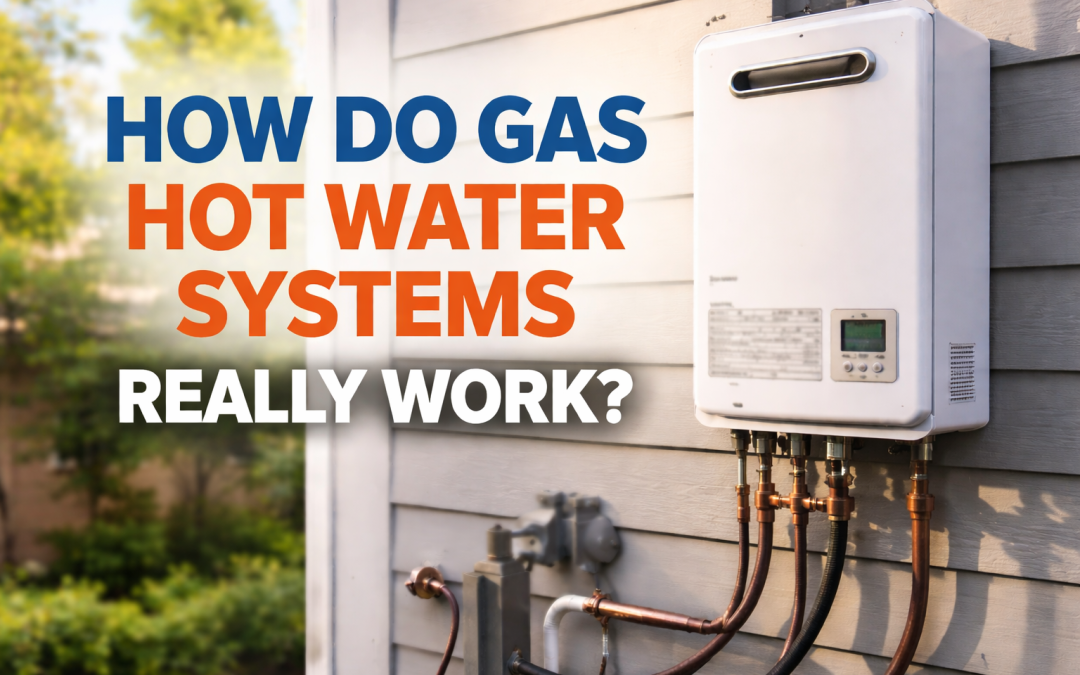
A client told us a funny story the other day. Their 14-year-old son hopped out of the shower, got dressed, and asked his Dad: How do gas hot water systems work?
The Dad had to admit it – he wasn’t entirely sure! But he’s definitely not alone – because while most homes rely on gas for hot water every single day, very few people understand what’s actually happening inside the unit – or why some systems behave so differently to others.
The simplest possible answer?:
All gas hot water systems heat water using combustion instead of electricity. But the way that heat is generated, stored, and delivered depends entirely on the specific technology used. And once you understand those differences, everything from performance to running costs suddenly makes a lot more sense.
But before breaking it down by system type, it will help to understand the core idea behind how gas hot water systems work in general:
-
Gas is burned in a controlled chamber
-
Heat is transferred into water
-
Safety systems constantly monitor temperature, flow, and exhaust.
That’s the foundation – the rest comes down to when the water is heated and where it’s held.
1. Storage Tank Gas Systems
A traditional gas hot water system with a storage tank heats a full volume of water and keeps it ready for use.
-
Cold water enters the tank from the bottom
-
A burner underneath heats it
-
Hot water rises naturally to the top where it’s drawn off when a tap is opened.
This design explains a lot about everyday behaviour. If several people shower back-to-back, for example, the tank can empty faster than it can reheat. On the other hand, once demand slows, recovery is usually quicker than electric systems.
For homeowners asking how does a gas hot water system work in practical terms, this heat-and-store approach is the simplest to understand. It’s reliable, mechanically straightforward, and forgiving of pressure variations.
2. Instant (Continuous Flow) Gas Systems
A gas instant hot water system works on a completely different principle – most notably, there is no tank at all. Instead, water is heated only when it flows through the unit.
When you open a tap:
-
Sensors detect movement
-
Ignite the burner
-
And heat water as it passes through a compact heat exchanger.
Flame intensity then adjusts in real time to maintain the temperature. That’s why instant systems don’t ‘run out’ of hot water – but it’s also why they rely heavily on adequate gas supply and water pressure.
This technology often prompts people to ask how does gas hot water work without storing anything. The answer is all about timing – the heat is created exactly when needed, not before.
Because of their design, instant units behave differently under load, which helps explain why performance can change if multiple taps are used at once.
3. Gas-Boosted Solar Hot Water Systems
Gas-boosted solar hot water systems add a third layer of logic. Namely, solar collectors heat the water first, using energy from the sun. When solar input isn’t sufficient – cloudy days, winter mornings, and heavy usage, for instance – the gas booster activates automatically to raise the water to the required temperature.
Many homeowners wonder how gas hot water works in these setups when they still see gas usage. The answer is that gas acts as a safety net, ensuring consistent temperature regardless of weather.
In most cases, the booster behaves like a compact gas water heater, turning on only when solar energy can’t do the job alone.
Why Gas Hot Water Systems Behave Differently In Real Homes
Once you understand the three technologies, the remaining questions tend to fall into place.
People often confuse system performance with faults, asking how does a gas heater work when temperature fluctuates or pressure changes. In reality, behaviour is usually linked to:
-
System type
-
Flow rate
-
Or supply limitations – not failure.
Similarly, modern gas hot water heater units rely on electronic controls, sensors, and safety shut-offs. These systems constantly monitor combustion, exhaust flow, and water temperature to keep operation safe and efficient.
Across all designs, gas hot water systems are heavily influenced by installation quality. In other words, pipe sizing, ventilation, and gas availability matter just as much as the appliance itself. That’s why two homes with identical units can experience very different results.
Whether you’re running a standalone unit or a natural gas hot water system connected to mains supply, correct setup determines how well everything works day to day.
What You’re Really Asking With ‘How Does It Work?’
Ultimately, when people ask how gas hot water works, they’re usually trying to understand why their system behaves the way it does:
-
Why it runs out
-
Why it fluctuates
-
Why one type costs more than another.
Once the way the technology works is clear, those questions stop feeling mysterious. Because while reliable gas hot water can seem like magic, it’s actually about matching the right system to the right household and using it as intended.
Need help choosing, troubleshooting, or upgrading a gas system? S&J Hot Water Brisbane provides clear advice, proper installation, and fast support – so your hot water works exactly the way it should, every time.
Related posts:
 The 7 Big Benefits: How Heat Pump Hot Water Systems Work
 How Does Solar Hot Water Work? A Simple Guide
 How Does An Instant Hot Water System Work?
 Australia’s Types Of Hot Water Systems Ranked
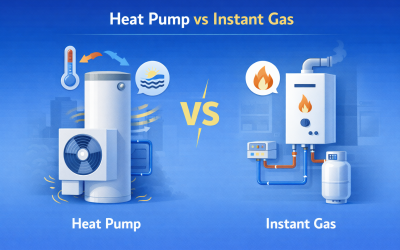 Heat Pump Vs Instant Gas Hot Water: Which Makes Most Sense?
 How To Relight Your Gas Hot Water System Pilot Light: A DIY Guide
