
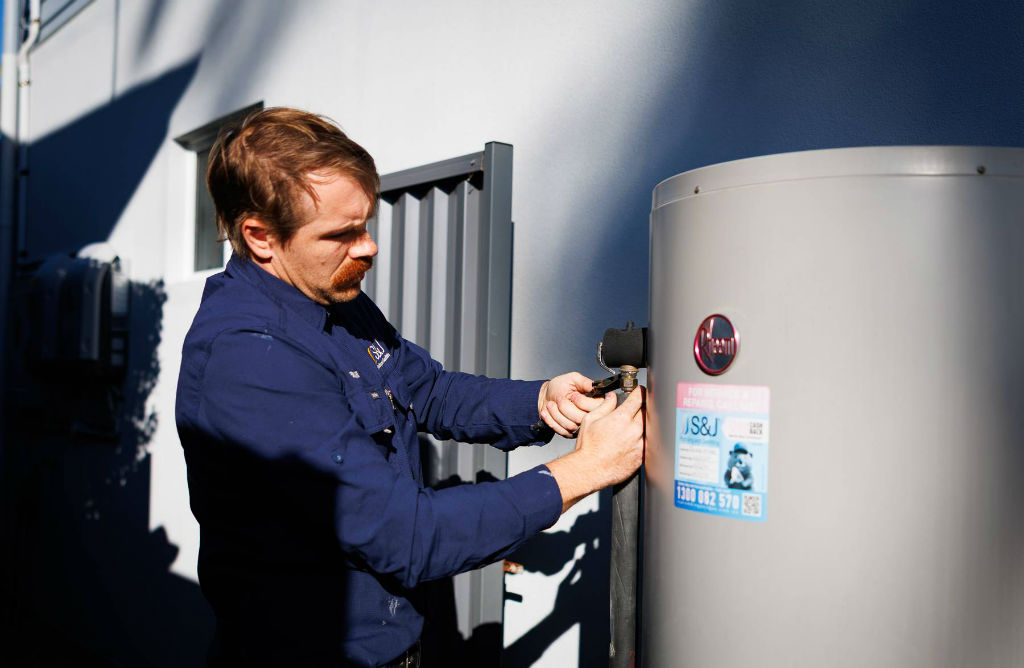
Most people don’t think about their hot water system much … until it stops working. But that’s understandable – it sits outside or in a cupboard, doing its job quietly for months or even years at a time, and asks for nothing in return. Until it does. A little hot water maintenance goes a long way toward preventing the kind of failure that leaves you cold on a Sunday morning needing a plumber that you never in your wildest dreams were planning for.
In our guide, we’re going to run through the must-do maintenance tasks that apply across all the system types out there in Brisbane – gas, electric, heat pump, solar, tank, and instant. And the best part? You don’t need to be a tradesperson to do most of this. You just need to know what to look for and when.
1. Check the pressure relief valve annually
The temperature and pressure relief valve – the TPR valve – is a safety device fitted to tank-based systems. Its job is to release pressure if the tank overheats or pressure builds beyond safe levels. If it fails, the consequences range from a leaking hot water system to, in extreme cases, a serious rupture.
Testing it takes about 30 seconds:
- Lift the lever briefly
- Let it snap back.
You should hear water discharge into the drain pipe. If nothing happens, or if it continues to drip after the test, the valve needs replacing.
This is one of the most commonly overlooked tasks in hot water system maintenance and one of the most important.
APPLIES TO: gas and electric storage systems.
2. Flush the tank every one to two years
Sediment builds up at the bottom of storage tanks over time – minerals from the water supply that settle and accumulate with each heating cycle.
Left alone, sediment reduces efficiency and makes the system work harder, which shortens its lifespan. It can also cause rumbling or popping sounds during heating, which is often the first sign something’s off.
Flushing the tank clears this buildup:
- Turn off the power or gas
- Connect a garden hose to the drain valve at the base of the tank
- Run the other end of the hose to a suitable drainage point outside
- Open the drain valve and allow water to flow until it runs clear
- Close the valve, disconnect the hose, and restore power or gas supply.
It’s manageable as a DIY task if you’re comfortable doing it, but a plumber can take care of it quickly during a routine service visit.
APPLIES TO: gas and electric storage systems.
3. Inspect the anode rod every 3-5 years
The sacrificial anode rod sits inside the tank and corrodes slowly over time – deliberately. It’s designed to attract the corrosive elements in the water so the tank lining doesn’t have to. When the rod is depleted, the tank itself becomes the target.
Hot water tank maintenance like this isn’t really a DIY job. The rod can be seized solid after years of heat and pressure, requires the right replacement for your specific tank, and a mistake on reassembly can cause a leak.
What you can do is ask your plumber to inspect and replace it during a scheduled service visit. It’s a straightforward addition to a routine call-out, and the payoff is significant – a tank that might otherwise need replacing at 10 years can often run comfortably to 15 with a rod replacement at the right time.
It’s one of the highest-value hot water heater maintenance tasks on this list precisely because most people never think to ask for it.
APPLIES TO: gas and electric storage systems.
4. Keep the area around the unit clear
This applies to every system type without exception. Hot water units – whether tank or instant, gas or electric – need adequate clearance for ventilation, access, and safe operation. Storing items directly around or on top of the unit restricts airflow, creates fire risk with gas systems, and makes it harder to spot leaks or issues early.
A clear zone of at least half a metre on all accessible sides is a reasonable standard. It also means that when a plumber does need to access the unit, they’re not working around stored boxes or garden equipment.
APPLIES TO: all system types.
5. Schedule a professional service every 1-2 years
A hot water maintenance guide worth following will always include professional servicing – not just the DIY checks.
A licensed plumber will:
- Inspect components you can’t easily access yourself
- Test thermostat accuracy
- Check gas connections and combustion on gas hot water systems
- Inspect electrical connections on electric hot water systems
- Assess the overall condition of the unit.
For Brisbane homeowners especially, the combination of hard water and a warm climate means systems can work harder than they would in cooler regions. An annual or biennial service catches problems while they’re still minor.
Hot water maintenance Brisbane plumbers carry out routinely includes all of the above, and it’s far cheaper than an emergency call-out for a system that’s failed completely.
APPLIES TO: all system types.
6. Monitor your system for early warning signs
Between professional services, you’re the first line of detection. The signs that something’s developing aren’t always dramatic – often they’re subtle changes that are easy to dismiss until they aren’t.
Watch out for:
- Water that takes longer than usual to heat up
- Fluctuating temperatures
- Discoloured or rust-tinged water
- A persistent dripping from the relief valve
- Unfamiliar sounds during heating
- Any visible pooling around the base of the unit.
Any of these warrants a call to a plumber before the situation escalates into hot water repairs that could have been avoided.
APPLIES TO: all system types.
7. System-specific checks
A few maintenance tasks are specific to certain system types and well worth knowing:
Heat Pump Systems: Keep the area around the unit clear of debris and check the air filter every few months. A blocked filter makes the system work harder and reduces efficiency.
Solar Hot Water Systems: Inspect roof-mounted collectors periodically for debris, shading from new growth, and any visible damage to panels or connections. Check that the booster element is functioning correctly.
Instant Gas Systems: Have the burner and heat exchanger inspected during professional servicing. Scale buildup in the heat exchanger is a common cause of hot water system repairs Brisbane plumbers see in areas with harder water.
Don’t wait until it’s cold!
The best time to stay on top of your hot water system is before something goes seriously wrong. A system that’s regularly checked and serviced will:
- Run more efficiently
- Last longer
- Cost you less over its lifetime than one that’s ignored until it fails.
If your system is due for a service, showing signs of trouble, or you’re not really sure what shape it’s in, S&J Hot Water Brisbane can always help. Book your obligation-free quote today.
Related posts:
 How To Tell If Your Hot Water Tempering Valve Needs Attention
 Gas VS Electric Hot Water: What’s Right For You?
 How Long Does Your Hot Water System Take To Heat Up?
 How To Clear A Blocked Hot Water Pipe In Shower
 How Long Each Hot Water System Type Really Lasts
 How To Flush A Hot Water System (And Why It Matters)
